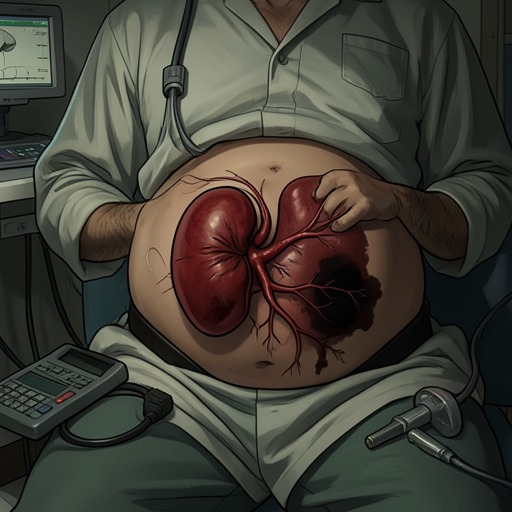
HCV-associated MPGN in renal allografts
Hepatitis C in Renal Disease, Hemodialysis and TransplantationHCV-associated MPGN in renal allografts is a de novo glomerular complication in which HCV infection harms a transplanted kidney through immune-complex and inflammatory mechanisms. Its importance extends beyond a single renal lesion: the disease can impair allograft function, accelerate graft loss, and expose the limits of post-transplant antiviral treatment, making HCV clearance before kidney transplantation a central preventive objective.
Definition and Clinical Setting
HCV infection is a systemic disease rather than an illness confined to the liver. Alongside chronic liver disease, it may produce mixed cryoglobulinemia, lymphoproliferative disorders, and renal disease. In native kidneys, the predominant HCV-associated lesion is MPGN associated with type II cryoglobulinemia, although MPGN without cryoglobulinemia and several less common glomerular diseases have also been reported. After kidney transplantation, the same HCV-related glomerular process can arise de novo in the renal allograft, where it joins other possible HCV-associated lesions such as acute or chronic transplant glomerulopathy and renal thrombotic microangiopathy.
The relationship is clinically important because HCV-positive, RNA-positive dialysis patients who undergo transplantation remain exposed to viral injury while receiving immunosuppression. HCV infection may then contribute to liver dysfunction, including fibrosing cholestatic hepatitis and cirrhosis, as well as hepatocellular carcinoma, while simultaneously damaging the renal graft. Earlier transplant cohorts also associated chronic post-transplant HCV infection with increased patient mortality, particularly after five years, although those findings came largely from the 1990s and from immunosuppressive regimens that differed from contemporary practice.
Pathology and Clinical Manifestations
The allograft disorder commonly presents with hypertension, microscopic hematuria, proteinuria, and declining renal function; nephrotic syndrome may occur in more severe cases. The estimated prevalence of glomerular lesions in HCV-infected renal allografts is approximately 5–15%, although the estimate varies according to whether protocol biopsies or biopsies performed for clinical indications are analyzed. De novo MPGN has been followed by membranous glomerulonephritis as the most frequent HCV-associated glomerular lesion in some biopsy series, and the diagnosis matters because de novo glomerulonephritis is associated with accelerated loss of the graft.
The pathology reflects an immune-complex process but may be difficult to recognize. Renal biopsy can show mesangial proliferation, double contours, and parietal deposits of IgM and C3, together with variable chronic injury in all renal compartments. Electron microscopy helps distinguish MPGN from transplant glomerulopathy: MPGN is characterized by subendothelial electron-dense deposits, whereas transplant glomerulopathy shows radiolucent areas in the glomerular basement membrane. The two lesions can coexist, indicating that HCV-related autoimmunity and alloimmune injury may operate together rather than as mutually exclusive explanations.
Post-transplant HCV-associated MPGN often has surprisingly low circulating cryoglobulin levels, with cryocrit values usually below 5%. This can limit detection and characterization of the disorder. Yet HCV RNA is usually present at a much higher concentration in the cryocrit than in serum, supporting a pathogenic role for the virus in the cryoglobulinemic process. The associated immune response may activate the classical complement pathway and deposit IgM-containing immune material in the allograft. HCV-associated MPGN can therefore be clinically active even when routine measurement suggests only a small circulating cryoglobulin burden.
Mechanisms and Overlapping Injury
The mechanism is not reducible to viral replication alone. HCV-infected transplant recipients may have heightened cellular and humoral immune responses, and HCV has been linked to glomerulitis, transplant glomerulopathy, anti-HLA antibodies, and antibody-mediated rejection. Pre-transplant anticardiolipin antibodies have also been associated with thrombotic microangiopathy in renal allografts, although that complication is uncommon. These observations complicate causal interpretation: some graft injuries may reflect alloimmunity, some HCV-related autoimmunity, and some a harmful combination of both.
A proposed local pathway centers on inflammation within the transplanted kidney. Under inflammatory stimulation, mesangial cells may express Toll-like receptor 3. HCV double-stranded RNA or immune complexes containing HCV may engage this receptor, promoting local chemokine and cytokine production, recruitment of mononuclear cells, and mesangial apoptosis. The transplanted kidney may express more proinflammatory cytokines than a native kidney, providing a setting in which even low circulating levels of immune complexes can amplify local glomerular injury.
The distinction from other transplant lesions is not merely academic. HCV-related MPGN may coexist with transplant glomerulopathy, and the overlap supports a model in which humoral immunity and autoimmunity act as harmful partners. In this setting, a biopsy is required to identify the dominant lesion and to avoid treating HCV-associated immune-complex disease as though it were isolated rejection or uncomplicated chronic transplant injury.
Prevention and Treatment
The strongest evidence favors prevention before transplantation. Antiviral therapy in HCV-infected dialysis patients can clear HCV in approximately half of treated patients, and treatment with interferon, with or without ribavirin, has produced sustained viral responses in at least 50% of renal transplant candidates in reported experience. Patients who remain HCV RNA-negative before transplantation have significantly less HCV-related glomerulonephritis afterward, and viral clearance before transplantation has been associated with avoidance of HCV-related glomerular lesions in the allograft. This makes pre-transplant treatment more than a strategy for protecting the liver: it is also a means of protecting the future kidney.
After transplantation, treatment is considerably more difficult. Interferon is generally avoided in renal allograft recipients because it can provoke acute rejection and graft loss. Ribavirin has shown some favorable individual experiences, but renal insufficiency increases the risk of hemolytic anemia, and ribavirin monotherapy cannot reliably produce a sustained viral response. Rituximab has been reported as successful in some cases of HCV-related MPGN; in one clinical experience, treatment was associated with disappearance of cryoglobulinemia and glomerular subendothelial immune deposits. Nevertheless, rituximab can cause excessive immunosuppression and may increase viral replication, so its apparent renal benefit carries a substantial infectious and virologic risk.
The choice of calcineurin inhibitor has not resolved the problem. Comparative evidence does not establish a clear advantage of cyclosporine or tacrolimus for post-transplant outcomes in HCV-infected patients. Studies have reported similar rates of graft loss and acute rejection, while other cohorts have produced conflicting signals about patient death, graft loss, rejection, or viral relapse. Consequently, no specific immunosuppressant has been shown to be definitively protective against de novo HCV-related MPGN, and treatment remains mainly symptomatic once the lesion has developed.
Prognosis and Significance
The prognosis explains the emphasis on timing. Patients who lose a previous graft because of de novo HCV-related glomerulonephritis may develop an earlier and more aggressive form of the disease in subsequent transplants. HCV infection is also an independent risk factor for renal allograft loss in some analyses, even in protocol-biopsy studies, although the effect may be partly mediated by the heightened immunologic risk common in this population. MPGN therefore represents both a direct viral complication and a marker of the complex immune environment surrounding the infected allograft.
The relation between HCV infection and MPGN in renal allografts ultimately reorganizes transplant management around a preventive sequence: establish active infection by detecting both anti-HCV antibodies and HCV RNA, evaluate its extrahepatic and hepatic consequences, treat suitable candidates before transplantation, and monitor the graft for proteinuria, hematuria, hypertension, and functional decline. Once post-transplant MPGN appears, clinicians face a narrow therapeutic margin between suppressing pathogenic immune activity and worsening viral replication, anemia, infection, or rejection. The decisive clinical insight is therefore that viral clearance before transplantation can prevent a renal lesion that is difficult to diagnose, difficult to treat, and capable of ending the life of the graft.